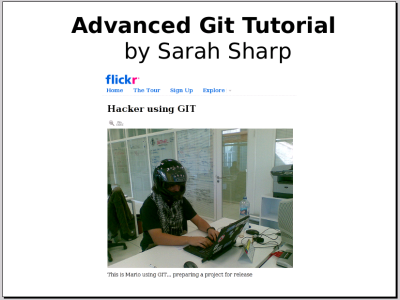
Feedback is welcome. I might present it again at the Open Source Bridge, a new Portland Open Source convention designed to fill the gap that OSCON left when they packed up for San Jose.
Feedback is welcome. I might present it again at the Open Source Bridge, a new Portland Open Source convention designed to fill the gap that OSCON left when they packed up for San Jose.
USB is getting a facelift!
In the beginning, there was USB 1.1, with the “low speed” and “full speed” devices (at 1 Mbps and 12 Mbps, respectively). Then USB 2.0 came along with “high speed” devices that ran at 480 Mbps. Now the new USB 3.0 bus specification defines “SuperSpeed” devices that run at 5 Gbps (5,120 Mbps).

For the past couple of months, I’ve been helping organize a student mini-conference for LPC, which will take place on September 16th. So far we only have 9 people registered for student day. We would like at least 15 students to make the student mini-conference a full-day event, and this week is the deadline for conference organizers to decide whether they need to scale back.
If you’re a student, and you’re even remotely interested in open source development, I suggest you take a look at the Linux Plumbers Conference Student Day page and register for the event.
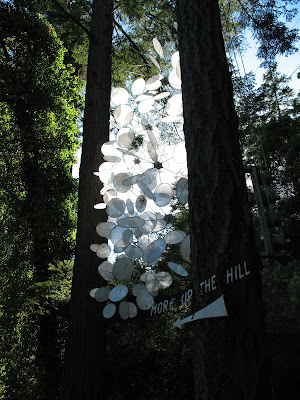
I’m finally done sorting through the pictures from the bike trip Jamey and I took in the San Juan Islands. I take a shitload of pictures every vacation, mostly because I’m not happy with the “automatic” setting on my Canon PowerShot A630. I ended up filtering a lot of them when I decided which to post to my picasaweb album, and now I’m filtering them further to present my favorite trip pictures here:
Over the past week, I’ve run into two different people who expressed the same thought, “Linux lacks support for a lot of devices.” I told them that this was a myth, and the Linux Driver Project has proven it is a myth.
Today I had an idea for a way to dispel this myth. I think someone should post a video of them walking into Circuit City, buying a random device, and walking out to their car. The video shows them configuring it on a Linux box and testing it. Then they would return the device and buy a new device. Buy, configure, return; repeat as necessary. The devices and configuration notes could be posted on the Linux Drivers Project wiki.
Now to find a decent videographer, buy a GSM data phone plan (for downloading packages and drivers in the car), and find some funding for devices that are non-returnable. In my copious spare time, of course.
The Portland State Aerospace Society (PSAS) builds, designs, and launches open source amateur rockets. If you haven’t heard about PSAS before, watch my five minute Ignite Portland 2 talk and follow along with the sides.
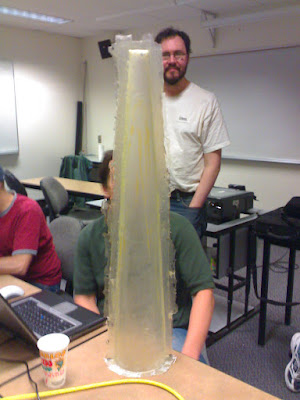
Dan showed off the start of the nosecone mold today.
Jamey and I will be biking the San Juan Islands to celebrate our first anniversary. Today I decided to go to the central library to check out some travel books on the subject.
It turned out that all the books on the San Juans were checked out. I was bummed because I had gone to the library for nothing, and I was going to be an hour late to the PSAS meeting. I got in the elevator to go down from the third floor. As the elevator started moving, this piece of paper fell from the ceiling:

The Portland State Aerospace Society (PSAS) builds, designs, and launches open source amateur rockets. If you haven’t heard about PSAS before, watch my five minute Ignite Portland 2 talk and follow along with the sides.
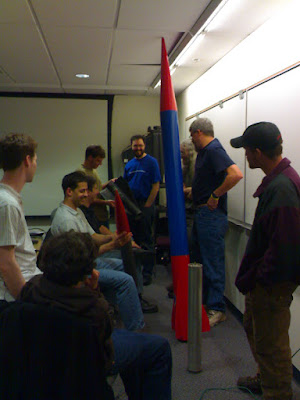
A PSAS member showed up to the meeting today with his own amateur rocket. DISCLAIMER: This is not the PSAS rocket (it’s still being rebuilt).
This past weekend, my Grandma Bailey turned 80. My family took my grandma to Lincoln City to celebrate. It was a wonderful trip, and it felt good to spend time with my family.
Highlights:
